

Views: 0 Author: Site Editor Publish Time: 2026-03-05 Origin: Site


A pipeline that looks strong on paper can still fail if it is installed in the wrong environment or selected without understanding real operating conditions. When discussing DI PIPES use, the key question is not simply where they can be installed, but where they perform best and deliver long-term value. This article explains where ductile iron pipe applications are most effective, why engineers rely on them in demanding systems, and how proper application matching ensures durable infrastructure.
One of the most common DI pipes use cases is pressurized water transmission. These pipelines carry large volumes of treated water from treatment plants to storage tanks or distribution networks. Because they operate under continuous internal pressure, material strength and joint integrity are essential.
Ductile iron pipe is designed to withstand substantial internal pressure while maintaining dimensional stability. Its mechanical strength supports long transmission distances and variable pressure conditions. For water utilities that require predictable, pressure-rated performance, DI pipe provides a reliable foundation for backbone infrastructure.
Beyond long transmission lines, DI pipe is widely used in municipal distribution systems. These networks include branching pipelines delivering potable water directly to communities and commercial facilities.
Distribution systems must handle pressure fluctuations, temperature variations, and underground loading conditions. Ductile iron pipe applications in these networks provide a balance of strength and flexibility, ensuring that buried pipelines remain stable over extended service periods.
Sewage force mains operate under pressure to transport wastewater to treatment facilities. Unlike gravity sewers, force mains require pressure-resistant pipe materials.
DI pipes use in force mains combines structural integrity with corrosion protection systems. Cement mortar linings and appropriate external coatings protect the pipe interior and exterior, supporting long-term durability in wastewater environments.
Reclaimed water systems also benefit from ductile iron pipe applications, especially where pressure ratings and mechanical reliability are priorities.
Industrial facilities often require pressure-rated pipelines for process water and non-corrosive fluids. DI pipe is frequently selected when mechanical strength, durability, and resistance to external loads are critical.
While not every industrial fluid is suitable for iron-based piping, properly specified ductile iron pipe applications serve effectively in many water-based industrial systems.
Potable water mains operate continuously under internal pressure. A pipe selected for this application must resist pressure cycles and occasional surge conditions.
Ductile iron pipe offers high tensile strength and robust wall structure, making it well suited for these conditions. Its performance in pressure-rated environments explains why DI pipes use remains common in municipal drinking water systems worldwide.
Internal cement mortar lining provides a smooth surface that supports stable water flow. A smoother interior reduces friction losses, helping maintain hydraulic efficiency over time.
This lining also acts as a protective layer between the transported water and the iron substrate, contributing to long-term durability.
Long potable water lines require reliable joint systems. Push-on gasketed joints allow slight deflection while maintaining tight seals.
Joint flexibility accommodates minor ground shifts and installation tolerances. In large municipal networks, consistent joint integrity reduces maintenance requirements and water loss risk.
Water infrastructure investments are designed for decades of service. Short-term material savings cannot compensate for long-term reliability concerns.
DI pipes use in potable networks reflects a preference for materials that provide predictable performance under varied underground conditions.
Force mains differ from gravity sewers because they rely on pumping systems to move wastewater. Internal pressure is a defining characteristic.
A pipe material must withstand both pressure and potential hydraulic surges. Ductile iron pipe applications in force mains provide structural security for these operating conditions.
Wastewater systems are typically buried in complex soil environments. External loads from soil and traffic combine with internal operational pressure.
DI pipes use in these environments benefits from mechanical strength and corrosion protection systems. Properly specified external coatings protect against soil-related corrosion, enhancing service life.
Not all wastewater environments are identical. Soil composition, moisture levels, and external exposure influence coating selection.
Ductile iron pipe applications can incorporate different external protection systems, including zinc-based coatings and additional seal coats. Matching protection to the environment ensures durability aligned with project requirements.
Engineers evaluate pressure class, burial depth, soil conditions, and fluid characteristics before specifying DI pipe for wastewater projects.
By aligning material performance with operating demands, DI pipes use becomes a strategic choice rather than a default selection.
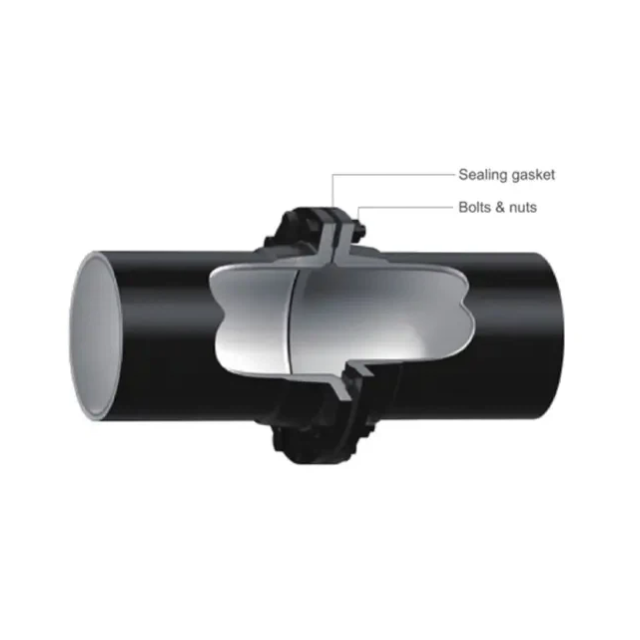
Pipelines installed beneath highways and urban roads must withstand substantial external loads.
Ductile iron pipe’s structural rigidity and strength make it suitable for such installations. DI pipes use in traffic zones reduces deformation risk and enhances structural stability under repeated loading.
Deeper burial increases soil pressure on pipelines. Materials must resist compressive forces without compromising structural integrity.
Ductile iron pipe applications perform reliably in deep trench installations, where mechanical strength is a primary requirement.
Ground movement can introduce stress into buried pipelines. A material combining strength and ductility provides greater tolerance to minor shifts.
DI pipes use in such environments leverages ductile iron’s ability to absorb limited deformation without fracture.
Construction sites are dynamic environments. Pipes may experience handling impacts during unloading and installation.
Ductile iron’s impact resistance contributes to reduced damage risk before commissioning, supporting smoother project execution.
Fire protection systems must perform immediately under high-pressure demand. Reliability is non-negotiable.
DI pipes use in fire mains reflects confidence in their pressure-handling capability and structural strength.
Emergency water systems often extend across industrial facilities and urban zones. Joint reliability supports uninterrupted performance.
Ductile iron pipe applications ensure that connections maintain integrity even under fluctuating pressure conditions.
Emergency systems are rarely tested under full operational load until needed. Materials chosen for these systems must offer consistent long-term reliability.
DI pipe provides confidence in structural stability and pressure performance over time.
Where external loads are significant, structural strength becomes a defining factor.
DI pipes use offers mechanical robustness that supports demanding installation conditions.
Infrastructure projects often specify extended service life. Durable materials reduce the likelihood of early replacement.
Ductile iron pipe applications support long design life expectations aligned with municipal planning strategies.
Field conditions are not always ideal. Material tolerance during handling and installation contributes to project efficiency.
Ductile iron pipe’s resilience reduces vulnerability to site-related damage.
Lifecycle cost considerations include maintenance, replacement, and downtime.
DI pipes use frequently aligns with projects prioritizing long-term value over minimal upfront cost.
Selecting the appropriate application requires evaluating multiple factors. The following table summarizes key considerations:
Evaluation Factor | Why It Matters | DI Pipe Advantage |
Fluid Type | Determines compatibility | Suitable for water and wastewater systems |
Internal Pressure | Defines structural requirement | High tensile strength supports pressure classes |
Soil Condition | Influences corrosion protection | Multiple coating options available |
External Load | Affects deformation risk | Strong wall structure resists load |
Service Life | Impacts lifecycle cost | Designed for long-term durability |
Understanding the fluid type and pressure rating is the first step in evaluating DI pipes use.
Soil aggressiveness, burial depth, and traffic conditions influence material performance.
Long-term infrastructure planning benefits from materials that require minimal intervention.
Proper configuration ensures that ductile iron pipe applications align with project demands.
DI pipes use is strongest in pressure-driven systems where durability, buried performance, and long-term reliability are essential. Evaluating applications based on real operating conditions ensures that the selected material supports structural integrity and service life expectations. For detailed technical information and project discussions regarding ductile iron pipe applications, contact Jin Steel to explore durable solutions tailored to your infrastructure needs.
1. What are the most common DI pipes use scenarios?
DI pipes are commonly used in pressurized water transmission, municipal distribution networks, sewage force mains, and fire protection systems.
2. Are ductile iron pipe applications suitable for deep burial projects?
Yes. Ductile iron pipe’s structural strength makes it appropriate for deep trench installations and heavy-load environments.
3. Why are DI pipes often selected for force mains?
Force mains operate under pressure. DI pipes provide the mechanical strength and joint reliability required for these systems.
4. How do engineers determine the right DI pipe configuration?
They evaluate fluid type, pressure class, soil condition, external loads, and expected service life to match lining, coating, and joint systems appropriately.
