

Views: 0 Author: Site Editor Publish Time: 2026-03-04 Origin: Site


Project specifications often define pressure levels, flow rates, and service life expectations clearly, yet the pipe material itself is sometimes treated as a secondary decision. For engineers, contractors, and distributors evaluating DI PIPES, understanding what the product truly represents is essential before comparing technical standards or pricing. This guide explains what ductile iron pipe is, how it is produced, and why it continues to be specified for water infrastructure worldwide, especially in pressure-bearing municipal systems.
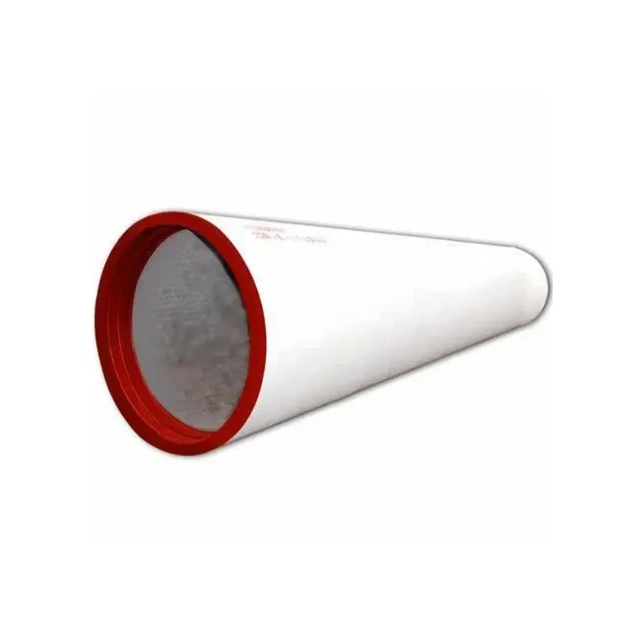
DI pipe is the abbreviated form of ductile iron pipe. It refers to a pressure-rated piping product manufactured from ductile cast iron and designed primarily for water, wastewater, and industrial fluid transport. Unlike gravity drainage pipes, DI pipe is engineered to withstand significant internal pressure while maintaining structural integrity under buried conditions.
In practical terms, DI pipe is not simply a metal tube. It is a system product that includes the pipe barrel, internal lining, external coating, and joint configuration. Each of these components contributes to overall performance in long-term underground applications.
The defining feature of ductile iron pipe lies in the word “ductile.” Ductility refers to a material’s ability to deform slightly under stress without cracking or fracturing. Traditional gray cast iron contains flake graphite structures that create stress concentration points. Under pressure or impact, cracks can propagate quickly.
Ductile iron, however, contains graphite in a spheroidal form. This microstructural difference significantly improves toughness and resistance to fracture. In real-world installations, this means better tolerance to soil movement, transportation impacts, and hydraulic pressure fluctuations.
Older cast iron pipes were strong but brittle. Ductile iron pipe retains the strength of iron while adding flexibility. This combination allows it to perform in demanding municipal networks where both internal pressure and external loads must be managed simultaneously.
For water infrastructure planners, the transition from cast iron to ductile iron marked a shift toward safer and longer-lasting underground systems.
Ductile iron pipe is primarily composed of iron alloyed with carbon and silicon, along with controlled trace elements. The chemistry is carefully adjusted during melting to achieve the desired mechanical properties.
This controlled composition provides high tensile strength, typically meeting or exceeding 420 MPa, allowing the pipe to withstand internal pressure in potable water and sewage systems.
The key metallurgical step in manufacturing ductile iron pipe is spheroidization. During casting, a measured amount of magnesium is introduced into the molten iron. This treatment transforms graphite into spherical nodules rather than flakes.
These spherical graphite nodules act like microscopic stress absorbers within the metallic matrix. Instead of encouraging crack growth, they help distribute stress more evenly.
The nodular graphite structure interrupts crack propagation. In practical terms, this means improved impact resistance during handling and installation, as well as enhanced durability under cyclic loading conditions such as water hammer.
For municipal networks expected to operate for decades, this microstructure is not an abstract technical detail. It directly influences reliability and service life.
Modern DI pipes are typically produced using centrifugal casting. Molten iron is poured into rotating molds, forming a uniform pipe wall under controlled conditions. This process ensures consistent wall thickness, smooth internal surfaces, and dimensional accuracy.
Consistency in manufacturing translates into predictable performance in the field, which is critical for large-scale infrastructure projects.
After casting, the pipe interior is lined with cement mortar. This lining serves two main purposes:
Protects the iron substrate from internal corrosion
Maintains smooth hydraulic performance
A smooth cement-mortar surface helps sustain a high flow coefficient, reducing energy requirements for pumping systems over time.
Externally, DI pipe is typically coated with metallic zinc followed by a finishing layer such as asphaltic or epoxy coating. This protective system shields the pipe from aggressive soils and environmental conditions.
Different project environments may require different coating strategies, but corrosion protection is always considered an integral part of the product rather than an optional accessory.
In buried water systems, the pipe material alone does not determine performance. The combination of iron substrate, internal lining, and external coating defines the full protection system.
When evaluating DI pipe, engineers assess the entire configuration. Long-term durability depends on how these elements work together.
Water transmission lines and sewage force mains operate under internal pressure. DI pipe’s high tensile strength allows it to maintain structural stability even under demanding pressure classes.
This capability makes it suitable for municipal distribution networks where consistent pressure performance is required.
Buried pipelines are subject to soil settlement, temperature variation, and surface traffic loads. The ductile nature of DI pipe enables slight deformation without structural failure.
In areas prone to minor ground movement, this property provides added security compared to more brittle materials.
Push-on joints with rubber gaskets are commonly used in DI pipe systems. These joints provide flexibility and allow for small angular deflections, accommodating alignment adjustments during installation.
Leak prevention is critical in potable water networks. Properly installed DI pipe joints contribute to long-term system integrity.
Municipal utilities prioritize reliability and predictable performance. DI pipe’s combination of mechanical strength, corrosion protection, and flexible joints supports service life expectations of 50 to 100 years or more.
Infrastructure decisions are long-term investments. Materials selected today must perform decades into the future.
Initial purchase price is only one component of total cost. Maintenance frequency, replacement cycles, and system downtime all influence lifecycle economics.
DI pipe’s durability reduces the likelihood of premature replacement, supporting favorable total ownership cost calculations.
The cement-mortar lining maintains a smooth interior surface, which helps sustain flow efficiency over time. Reduced buildup inside the pipe contributes to consistent hydraulic capacity.
Externally, zinc and protective coatings guard against soil corrosion, further extending operational life.
Pipes must be transported, unloaded, and installed under various site conditions. Ductile iron’s impact resistance helps reduce damage risk during these phases.
Field resilience is an often-overlooked advantage when comparing pipe materials.
Ductile iron is recyclable. Many infrastructure projects now evaluate environmental impact as part of procurement criteria.
The ability to recycle the material at the end of its service life supports sustainable construction objectives.
DI pipe is widely used in municipal water transmission mains and distribution networks. Its pressure rating and internal lining make it suitable for conveying treated drinking water.
In pressurized sewage systems, pipe strength and joint reliability are essential. DI pipe performs well in force main applications where pressure and external loads are present.
Fire protection systems require dependable pressure performance. Industrial facilities also utilize DI pipe for process water and other fluid systems when durability is required.
Projects involving deep burial, heavy traffic zones, or challenging soil conditions benefit from DI pipe’s structural robustness.
When installation environments are demanding, material reliability becomes a decisive factor.
While both are iron-based products, ductile iron pipe is significantly stronger and more flexible than traditional cast iron. The nodular graphite structure differentiates the two in performance.
DI pipe is heavier than some plastic alternatives. However, weight contributes to mechanical stability under external loads.
In many infrastructure scenarios, structural strength outweighs handling convenience.
Selecting pipe material solely on initial cost may overlook long-term operational factors. Service life, maintenance, and risk management should be evaluated together.
Infrastructure systems are designed for decades of service, and material reliability plays a central role in that expectation.
Understanding DI pipe fundamentals enables engineers and distributors to compare specifications more accurately and align material performance with project demands. Rather than viewing it as a generic iron product, it should be recognized as a high-strength, pressure-rated solution engineered for modern water infrastructure. For detailed technical specifications or project discussions regarding ductile iron piping systems, contact Jin Steel to explore application-matched solutions for your next infrastructure project.
1. What is the main advantage of DI pipes in water systems?
DI pipes combine high tensile strength with ductility, allowing them to withstand internal pressure and external loads in buried water infrastructure.
2. Are DI pipes suitable for potable water transport?
Yes. With cement mortar lining and proper protective coatings, DI pipes are widely used in municipal drinking water transmission and distribution networks.
3. How long can ductile iron pipe last underground?
With appropriate corrosion protection and installation practices, ductile iron pipe systems are commonly designed for service lives exceeding several decades.
4. Why are DI pipes preferred in pressurized sewage systems?
Their strength, joint reliability, and resistance to soil loads make DI pipes well-suited for force mains and other pressure-based wastewater applications.
