

Views: 0 Author: Site Editor Publish Time: 2026-03-05 Origin: Site


Every infrastructure project begins with a simple but critical question: will this material perform reliably under the real conditions of service? When engineers and project planners evaluate DUCTILE CAST IRON PIPES, they are not only looking at material strength on paper. They are assessing whether the pipe fits the pressure level, soil condition, operational demands, and long-term service expectations of a specific system. Understanding where ductile iron pipe performs best helps buyers connect product capability with real application needs, ensuring both safety and long-term value.
Municipal potable water networks require pipes that can withstand constant internal pressure while maintaining structural integrity for decades. Ductile iron pipe is widely used for transmission mains and distribution branches because it offers high tensile strength and reliable load-bearing capacity.
Large-diameter trunk lines must carry substantial volumes of water across long distances. Smaller branch lines must handle pressure fluctuations caused by demand changes. In both cases, structural consistency is essential. Ductile iron pipe’s strength provides a stable backbone for water supply systems, supporting uninterrupted service.
Water quality preservation is a priority in potable systems. Cement mortar lining inside ductile iron pipe creates a smooth, protective barrier between the water and the metal surface. This lining reduces internal corrosion and supports stable hydraulic flow.
A smooth internal surface also maintains flow efficiency over time, reducing friction losses and helping utilities manage energy consumption. When buyers ask what is ductile iron pipe used for in drinking water systems, the answer lies not only in strength but also in its lining technology and long-term hydraulic performance.
Water utilities prioritize stability. Frequent repairs increase maintenance budgets and disrupt communities. Ductile iron pipe’s long service life, combined with dependable joint systems, supports infrastructure that can operate consistently over decades. For municipal planners, this predictability is often more valuable than short-term savings.
Wastewater systems present different challenges than potable water systems. Structural reliability remains important, but the internal environment may be more chemically aggressive. In many gravity or low-pressure sewer applications, cement mortar lining remains effective, providing structural stability and smooth flow characteristics.
Ductile iron pipe is often chosen for sewer mains where strength and burial depth demand a robust pipe wall.
Certain wastewater environments contain aggressive substances that may require enhanced internal protection. The flexibility of ductile iron pipe configurations allows for additional lining options depending on project conditions. This adaptability makes ductile iron pipe suitable across a broad range of sewer and wastewater projects.
Buried sewer lines often experience heavy soil loads and traffic loads, especially in urban areas. Structural durability protects against collapse or deformation. Ductile iron pipe’s strength and resistance to cracking make it a reliable choice where structural stability cannot be compromised.
Fire protection networks demand immediate and reliable pressure delivery. During emergency use, sudden pressure changes may occur. A pipe material must maintain integrity under rapid demand conditions.
Ductile iron pipe’s high tensile strength and toughness help ensure that fire water supply systems remain dependable when they are needed most.
Fire protection lines are often installed beneath roadways, parking areas, or industrial facilities. These environments impose additional external loads. Structural robustness protects the pipe against surface traffic stress and mechanical impact.
Push-on joints with rubber gaskets provide flexible, leak-resistant connections. In emergency systems, joint reliability is as important as pipe body strength. A secure joint reduces the risk of leakage under pressure surges.
Industrial facilities frequently transport cooling water, process water, or other non-potable fluids. These systems require pipes capable of handling internal pressure and varied operating conditions.
Ductile iron pipe provides structural confidence for plant infrastructure, supporting consistent operation in demanding environments.
Industrial zones may include vibration, equipment movement, and heavy vehicle traffic. A tough pipe body reduces the likelihood of mechanical damage during both installation and operation.
Industrial applications often require careful consideration of internal media and external soil conditions. The ability to select suitable linings and coatings allows ductile iron pipe to adapt to diverse industrial environments.
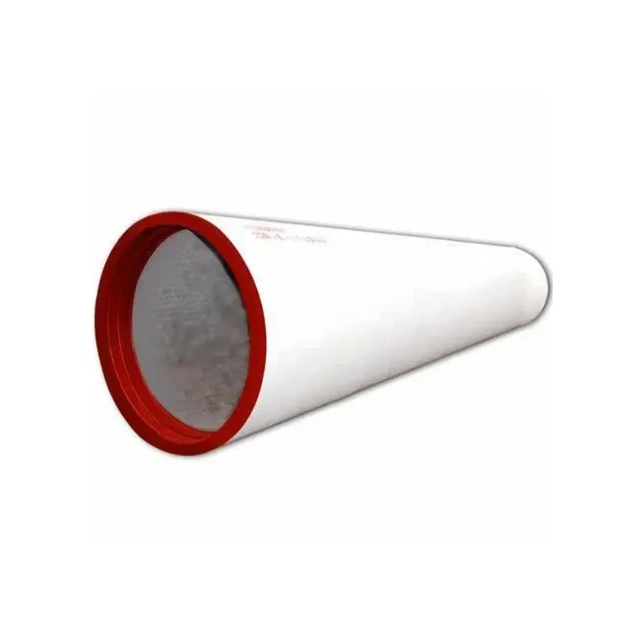
Irrigation networks and rural utility lines may extend over long distances. These pipelines are often buried in varied soil conditions. Structural strength and corrosion protection ensure durability across extended runs.
Rural installations may not have the same controlled conditions as urban construction sites. Mechanical robustness reduces the risk of damage during transportation and trench placement.
Utility expansion projects focus on long-term cost efficiency. Durable pipe materials minimize future replacement costs and support stable infrastructure development.
Areas with soft soil or ongoing construction may experience settlement. Ductile iron pipe’s ductility allows it to tolerate moderate deflection without fracturing.
Pipeline installations beneath highways or heavily trafficked roads must resist dynamic loads. Strong pipe walls and secure joints protect against deformation and leakage.
Joint flexibility allows limited movement between pipe sections. This adaptability supports continued service even when minor ground shifts occur.
While ductile iron pipe is versatile, different fluids may require different internal linings. Understanding the transported media ensures proper configuration.
Environmental conditions vary widely. Soil aggressiveness, moisture levels, and external stress influence coating selection. Matching configuration to environment enhances service life.
No pipeline material is universally perfect for every situation. However, ductile iron pipe’s adaptability makes it suitable across many applications when configured correctly.
Application | Why Ductile Iron Pipe Fits | Key Buyer Checkpoint |
Potable water | Strength, lining, long service life | Compliance with water standards |
Sewer/wastewater | Structural reliability underground | Internal protection type |
Fire protection | Reliable pressure performance | Joint sealing capability |
Industrial piping | Durable in demanding use | Fluid compatibility |
Irrigation/utilities | Long-run durability | Soil and load conditions |
Shanxi Jincheng Steel Holding Group Co., Ltd., known as Jin Steel, integrates raw material production, casting, processing, and quality control within a full industry chain structure. Since its establishment in 2002, the group has grown into a large-scale steel enterprise with substantial production capacity and recognized manufacturing excellence.
Its ductile cast iron piping products benefit from controlled metallurgical processes and stable supply capability. As a member of the China Iron and Steel Industry Association and a nationally recognized intelligent manufacturing model factory, Jin Steel ensures that its ductile iron pipes meet the structural and durability expectations required in water, sewage, fire, industrial, and irrigation systems.
Application suitability determines whether a pipeline system performs reliably for decades or requires early replacement. DUCTILE CAST IRON PIPES demonstrate their value in potable water networks, wastewater systems, fire protection infrastructure, industrial plants, irrigation lines, and load-intensive installations. Their adaptability, strength, and corrosion protection make them a dependable foundation for modern infrastructure. When evaluating pipeline projects, many engineers continue to rely on ductile iron piping systems for consistent performance across real-world service conditions. For detailed product specifications and project consultation, contact Jin Steel to discuss how our ductile iron pipe solutions can support your next infrastructure project.
1. What is ductile iron pipe used for most commonly?
Ductile iron pipe is widely used in potable water supply, sewer systems, fire protection networks, industrial process lines, and irrigation infrastructure.
2. Are DUCTILE CAST IRON PIPES suitable for fire protection systems?
Yes. Their high strength and reliable joint systems provide stable performance during emergency pressure demand.
3. Can ductile iron pipe be used for wastewater applications?
Yes. With appropriate lining selection, ductile iron pipe performs effectively in many sewer and wastewater environments.
4. Why is ductile iron pipe chosen for heavy-load installations?
Its structural strength and ductility allow it to resist soil pressure, traffic loads, and moderate ground movement, making it suitable for challenging installation conditions.
