

Views: 0 Author: Site Editor Publish Time: 2026-03-04 Origin: Site


Performance in buried pipeline systems is rarely judged on installation day. It is judged years later, when maintenance records, leakage rates, and operating stability tell the real story. DUCTILE CAST IRON PIPES continue to be specified worldwide not simply because they can carry pressure, but because they combine strength, durability, corrosion protection, and lifecycle value in a way that reduces long-term infrastructure risk. For municipal water, fire protection, and industrial utility networks, this balance is what keeps ductile iron pipe relevant in modern pipeline design.
The word “ductile” is not marketing language. It refers to the pipe’s ability to deform under stress without fracturing. Traditional gray cast iron contains flake graphite structures that create internal stress concentration points. Under sudden load or impact, cracks can propagate quickly.
Ductile iron, by contrast, undergoes a spheroidization process during manufacturing. Magnesium treatment transforms graphite into rounded nodules. This seemingly small metallurgical change dramatically improves toughness and impact resistance. In practical terms, this means a pipeline that can tolerate stress events such as soil settlement, vibration, or water hammer without brittle failure.
For buyers evaluating long-term reliability, this structural difference directly translates into reduced breakage risk and fewer emergency repairs.
The nodular graphite acts like microscopic buffers embedded in a continuous metallic matrix. Instead of allowing cracks to spread freely, these nodules interrupt crack paths. This enhances resistance to fracture and provides the material with higher elongation capability compared to traditional cast iron.
The result is a pipe that performs more like steel in strength while retaining the casting advantages of iron. This hybrid benefit—strength plus toughness—is one of the key ductile iron pipe benefits recognized by engineers.
From transportation to installation, pipes are exposed to impacts and handling stress. Ductile iron pipe’s resistance to cracking reduces the risk of damage during loading, unloading, and trench placement. In pressurized systems, this resilience improves operational safety margins.
Ductile iron pipe typically offers a minimum tensile strength of 420 MPa. That strength ensures reliable performance under sustained internal pressure. In water transmission systems, pressure stability is critical to avoiding leaks and joint separation.
Higher strength also provides a safety buffer against unexpected pressure surges.
Buried pipelines are subject not only to internal pressure but also to external forces. Soil backfill, compaction, heavy traffic loads, and even construction vibration impose additional stress. A structurally strong pipe reduces deformation and maintains joint integrity under these conditions.
This structural confidence is particularly important in urban infrastructure where surface loads are significant.
Pipe failures are costly—not just financially, but socially. Road closures, service interruptions, and emergency repair work create operational disruptions. A pipe material that maintains structural integrity under varied stress conditions directly supports long-term service continuity.
Soil settlement is common in newly developed areas. Even small shifts can introduce bending stress. The ductility of ductile iron pipe allows limited deflection without cracking. Combined with flexible joint systems, pipelines can absorb moderate ground movement.
Rapid valve closure or pump shutdown can create transient pressure spikes. These events generate sudden internal forces. A tough, high-strength pipe body helps absorb these shocks, protecting the overall system.
Compared to brittle alternatives, ductile iron pipe resists mechanical damage during field handling. Reduced breakage during logistics translates into lower project waste and more predictable installation schedules.
Most ductile iron pipes used in water systems are lined with cement mortar. This lining provides a smooth internal surface that maintains hydraulic efficiency. It also isolates the iron from direct contact with transported water, supporting water quality preservation.
A smoother interior reduces friction losses, which helps maintain flow performance over decades.
Externally, zinc coatings combined with seal coats protect the pipe against aggressive soil conditions. These protective systems act as a barrier between the metal and the surrounding environment.
In regions with corrosive soils, proper external protection significantly extends service life.
Different soil conditions require different protection levels. Matching the coating system to the burial environment ensures that the pipe’s structural strength is preserved over time. This is not about adding unnecessary cost; it is about ensuring the right level of durability.
Hydraulic efficiency is not just an initial performance figure. Over time, scaling and internal roughness can reduce flow capacity. Cement mortar lining maintains a high flow coefficient and resists internal buildup.
Stable internal diameter and smooth flow reduce energy consumption in pumped systems. Lower friction losses contribute to predictable operating cost over the pipeline’s lifespan.
Infrastructure planning often spans decades. A pipe that maintains consistent performance reduces the need for early replacement. Long-term reliability supports cost control and budget planning.
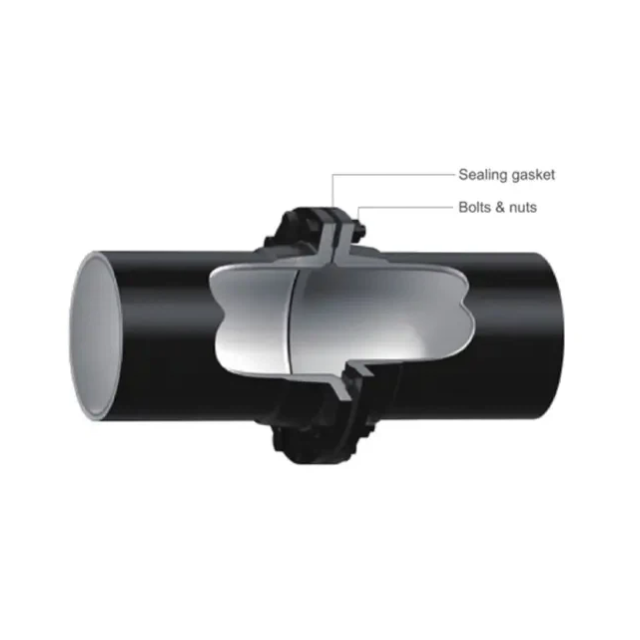
Push-on joints simplify field assembly. No welding or complex alignment equipment is required in standard installations. Faster jointing reduces labor time and project duration.
Durable materials reduce break frequency. Lower repair incidence means fewer service interruptions and less reactive maintenance spending.
Initial procurement cost represents only a fraction of total ownership cost. When evaluating ductile iron pipe benefits, many buyers consider service life exceeding 50 years as a critical economic advantage.
Water distribution networks require dependable long-term performance. Structural strength, lining protection, and reliable joints make ductile iron pipe suitable for trunk and branch lines.
Fire protection systems depend on immediate pressure availability. Strong, resilient pipe bodies provide reliability under emergency demand.
Industrial water supply and utility pipelines require durability and minimal downtime. A stable pipeline backbone supports overall system reliability.
Feature | What It Means in Practice | Why Buyers Care |
High strength | Handles internal and external loads | Reduced structural risk |
Ductility | Tolerates movement and shock | Lower break frequency |
Cement lining | Smooth flow path | Stable hydraulic efficiency |
External coating | Soil corrosion protection | Longer service life |
Push-on joints | Faster installation | Reduced labor time |
Shanxi Jincheng Steel Holding Group Co., Ltd., operating under the brand Jin Steel, has built a full industry chain steel manufacturing platform since 2002. With strong production capacity and recognized industrial credentials, Jin Steel integrates raw material control, advanced casting processes, and quality inspection systems into its ductile cast iron piping products.
The group’s industrial scale, national manufacturing recognition, and environmental compliance support stable production and reliable product quality. This foundation ensures that each ductile iron pipe supplied reflects consistent standards of strength, durability, and corrosion protection.
The long-standing reputation of ductile iron pipe comes from the way structural strength, toughness, corrosion resistance, and installation efficiency work together in practical infrastructure applications. When evaluating pipeline materials, buyers often return to ductile iron piping systems because they offer dependable performance across decades of service. For project consultation, technical details, or product specifications, contact Jin Steel today to discuss your requirements and receive professional support tailored to your pipeline needs.
1. What are the main ductile iron pipe benefits in water systems?
Ductile iron pipe benefits include high tensile strength, corrosion-resistant linings, reliable joints, and long service life, making it suitable for municipal water distribution.
2. Are DUCTILE CAST IRON PIPES suitable for high-pressure applications?
Yes. Their high tensile strength and structural integrity allow them to withstand substantial internal pressure and external load conditions.
3. How long can ductile iron pipe typically last underground?
With appropriate lining and coating, service life can exceed several decades, often 50 years or more depending on soil and operating conditions.
4. Does ductile iron pipe require special installation equipment?
Standard push-on joint systems simplify installation and reduce the need for specialized welding equipment in many applications.
