

Views: 0 Author: Site Editor Publish Time: 2026-03-11 Origin: Site


No pipeline project begins with the question “Which material is perfect?” It begins with performance targets, pressure classes, soil conditions, and long-term reliability goals. When comparing DI PIPES with alternatives such as PVC, HDPE, and steel, the real issue is not simply price per meter, but how each material behaves in real installations over decades of service. This article examines the practical differences that influence engineering decisions, focusing on how ductile iron pipe performs in demanding buried pressure systems and how it compares to other commonly specified materials.
Internal pressure is the primary design parameter for water transmission and force mains. Pipe materials must withstand continuous operating pressure, surge events, and occasional hydraulic shocks.
Ductile iron pipe is manufactured to specific pressure classes, combining high tensile strength with structural wall integrity. In contrast, thermoplastic materials rely more heavily on wall thickness and may behave differently under surge conditions. Steel pipes also offer high strength but require careful corrosion management.
Pressure performance should be evaluated not only by nominal rating but also by long-term reliability under cyclic loading.
Buried pipelines are subject to soil loads, traffic loads, and ground movement. Material stiffness and structural design influence deformation behavior.
Ductile iron pipe offers a rigid structure capable of supporting significant external loads. PVC and HDPE are more flexible materials, relying on soil support to distribute loads. Steel pipe provides strength but may require additional structural considerations depending on installation depth.
Understanding soil conditions and installation methods is essential when comparing materials.
Corrosion is a critical factor in underground infrastructure. DI pipe typically incorporates internal cement mortar lining and external zinc-based coatings with seal coats. Steel pipes often require advanced coating systems and cathodic protection in aggressive soils. PVC and HDPE, being non-metallic, are inherently resistant to corrosion but may have other mechanical considerations.
Material comparison must include corrosion management as part of total system performance.
Installation conditions vary widely across projects. Some materials are lighter and easier to handle manually. Others provide greater tolerance to handling impacts and mechanical stress.
Ductile iron pipe offers mechanical resilience during handling and installation, reducing damage risk. Plastic pipes may offer lighter weight advantages but can require careful trench preparation to prevent deformation.
Purchase price is only one component of infrastructure cost. Maintenance frequency, service interruptions, and replacement cycles influence long-term financial performance.
When comparing DI pipe vs PVC, DI pipe vs HDPE, or DI pipe vs steel pipe, evaluating lifecycle cost often changes the decision outcome.
The following table summarizes key comparison criteria:
Comparison Factor | DI Pipe | PVC | HDPE | Steel |
Pressure Strength | High | Moderate | Moderate | High |
External Load Resistance | Strong | Soil-dependent | Soil-dependent | Strong |
Corrosion Strategy | Coated metal system | Non-corrosive | Non-corrosive | Requires protection |
Installation Handling | Robust | Lightweight | Flexible | Heavy |
Lifecycle Expectation | Long-term | Application-based | Application-based | Maintenance-dependent |
PVC pipe is lightweight and widely used in water distribution. However, ductile iron pipe provides greater mechanical strength and impact resistance. In projects where external load and durability are primary concerns, DI pipe often delivers higher structural confidence.
PVC relies on soil support for structural stability. Improper backfilling can affect long-term performance. Ductile iron pipe maintains inherent rigidity, reducing dependence on perfect trench conditions.
For installations beneath heavy traffic zones, DI pipe often demonstrates superior structural reliability.
PVC is lighter, which can simplify transportation and manual handling. This can be advantageous in small-diameter installations or projects prioritizing rapid placement.
However, ductile iron’s additional weight contributes to stability and resistance to flotation in saturated soils.
PVC may be suitable in lower-pressure distribution systems with controlled installation conditions. DI pipe is often stronger in high-pressure transmission lines, heavy-load installations, and projects requiring long-term structural assurance.
HDPE is known for flexibility, allowing long continuous runs and resistance to ground movement. Ductile iron pipe, being rigid, provides structural stability and predictable load distribution.
Flexibility can be beneficial in seismic areas, while rigidity supports installations under heavy traffic loads.
HDPE often uses fusion welding, creating continuous pipelines. DI pipe typically uses gasketed push-on joints, allowing controlled deflection and easier maintenance access.
Joint selection influences repair strategies and installation speed.
Under deep burial or heavy surface loads, ductile iron’s structural stiffness can reduce deformation risk. HDPE relies more heavily on soil support and proper bedding.
For long-term buried service in load-intensive areas, DI pipe frequently provides higher mechanical security.
HDPE may be preferred for trenchless installations or applications requiring flexibility. Ductile iron pipe is frequently favored in pressurized municipal systems where structural integrity and longevity are primary objectives.
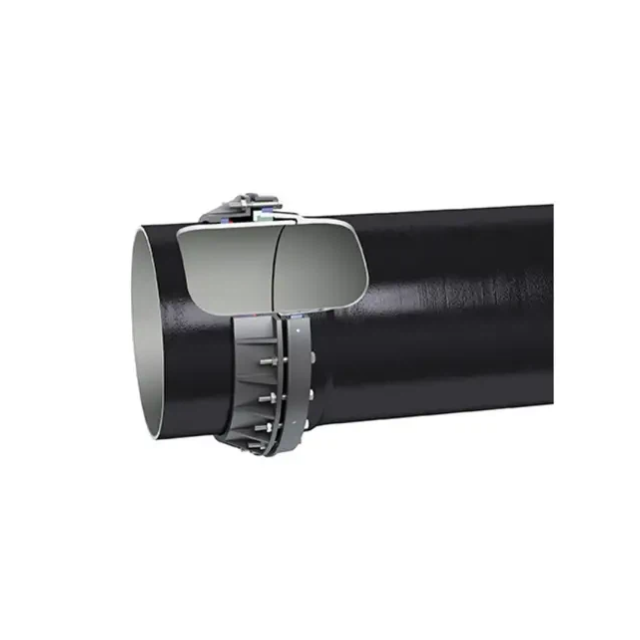
Steel pipe offers high tensile strength and is commonly used in large-diameter transmission lines. However, ductile iron provides a combination of strength and fracture resistance due to its nodular graphite structure.
The ductility of DI pipe helps absorb stress without catastrophic failure.
Steel requires comprehensive corrosion protection systems, especially in aggressive soils. Ductile iron pipe incorporates zinc coatings and protective seal coats as part of standard production.
Corrosion strategy complexity may influence material choice.
Steel pipe installations often involve welding and specialized equipment. Ductile iron pipe’s push-on joints allow simpler assembly in many municipal applications.
Ease of installation can impact project timelines and labor costs.
In medium to large diameter municipal pressure systems, DI pipe offers a balance of strength, corrosion resistance, and installation practicality.
Traditional cast iron contains flake graphite, which can promote crack propagation. Ductile iron contains spheroidal graphite, enhancing toughness and flexibility.
This metallurgical difference explains improved mechanical performance.
Ductility allows slight deformation under stress, reducing fracture risk during ground movement or impact events.
As infrastructure standards evolved, ductile iron pipe gradually replaced traditional cast iron due to improved reliability and pressure performance.
Municipal transmission and distribution networks represent a core strength area for DI pipe.
When infrastructure planning targets multi-decade service, ductile iron pipe aligns with long-term durability goals.
High-load environments and challenging trench conditions favor materials with structural rigidity and impact resistance.
DI pipe’s combination of strength and protective coatings supports predictable performance in demanding systems.
For small-diameter installations requiring minimal equipment, lightweight plastic pipes may offer handling advantages.
Highly aggressive chemical environments may favor non-metallic materials.
In short-term or temporary systems, lower upfront material cost may be the primary driver.
Comparing materials objectively ensures that specifications align with real project requirements rather than assumptions.
Clarify pressure class, burial depth, and environmental conditions.
Evaluate maintenance expectations and durability.
Technical specifications determine long-term reliability.
Structured comparison prevents oversight of critical performance factors.
No single pipe material is universally superior, but in demanding buried pressure applications, ductile iron pipe systems remain one of the most balanced and reliable options available. By comparing materials according to operating conditions, load demands, corrosion strategy, and service life expectations, project teams can select solutions that align with long-term infrastructure goals. For detailed product specifications and project discussions regarding ductile iron pipe solutions, contact Jin Steel to explore configurations designed for durable municipal and industrial systems.
1. How does DI pipe compare to PVC in pressure systems?
DI pipe typically offers higher structural strength and impact resistance, making it suitable for higher-pressure and heavy-load installations.
2. Is HDPE better than DI pipe for underground pipelines?
HDPE offers flexibility and is suitable for certain trenchless applications, while DI pipe provides rigidity and strength for pressure-driven municipal systems.
3. Why choose DI pipe instead of steel pipe?
DI pipe combines strength with standardized corrosion protection and simplified jointing, making it practical for many municipal pressure applications.
4. Does DI pipe cost more than plastic pipes?
Initial material cost may vary, but lifecycle performance, durability, and maintenance considerations often influence total project economics.
