

Views: 0 Author: Site Editor Publish Time: 2026-03-11 Origin: Site


Infrastructure investment decisions rarely fail because engineers selected the wrong material category. More often, problems arise because the specification did not fully match the operating environment. When evaluating DUCTILE CAST IRON PIPES, buyers should look beyond the basic material name and carefully confirm pressure class, diameter, joint system, lining, coating, and service conditions. Selecting ductile iron pipe is not simply a material decision; it is a configuration decision that directly affects safety, cost control, and long-term reliability.
Understanding these checkpoints before placing an order reduces uncertainty and ensures that the pipeline system will perform as expected throughout its service life.
Every specification process should begin with a clear understanding of the transported medium. Potable water, raw water, reclaimed water, wastewater, irrigation supply, and industrial process fluids all present different internal conditions.
For potable water, lining smoothness and material stability are critical to maintaining water quality and hydraulic efficiency. Wastewater systems may expose the pipe interior to chemical compounds that influence lining selection. Industrial pipelines may involve higher temperatures or varying pH levels.
The transported medium directly influences the internal protection strategy. Confirming this detail early prevents unnecessary redesign and protects long-term system performance.
Each service category places unique demands on the pipe.
Potable water systems prioritize hygiene, smooth flow, and corrosion resistance. Wastewater systems require structural integrity under burial loads and possible exposure to aggressive internal conditions. Industrial services often require enhanced durability and resistance to variable operating environments.
When buyers choose ductile iron pipe, aligning the pipe configuration with the application type ensures the pipe body and protective systems work together effectively.
Working pressure is often listed in design documentation, but surge pressure is sometimes underestimated. Pressure spikes caused by pump shutdowns or valve closures can exceed normal operating levels.
Selecting an appropriate pressure class ensures the pipe can tolerate both steady-state conditions and transient events. A carefully chosen ductile iron pipe configuration adds a safety buffer that supports infrastructure stability and reduces long-term repair risks.
Pipe diameter determines hydraulic capacity and energy efficiency. A pipe that is too small increases velocity and friction loss, raising pumping costs. An oversized pipe increases procurement cost without proportional benefit.
Flow demand analysis should consider peak usage, future expansion plans, and system redundancy requirements. Selecting the correct diameter of ductile iron pipe balances capital investment and operational efficiency.
Pressure class defines the structural capability of the pipe wall. It must correspond to real operating pressures rather than theoretical minimum values.
A higher pressure class provides greater tolerance to stress but may increase cost. The key is achieving a rational balance between safety margin and economic efficiency.
Short-term cost savings from choosing a lower pressure rating can result in long-term maintenance expenses. Infrastructure pipelines are designed for decades of service. Selecting ductile iron pipe based on realistic pressure data ensures sustainable performance.
Push-on joints are widely used because they simplify field installation. Rubber gasket systems allow slight angular deflection while maintaining leak-tight connections.
For municipal water and utility lines, push-on joints provide installation efficiency and reliable sealing performance.
Certain projects involve significant thrust forces, such as pipeline bends, elevation changes, or pumping stations. In these scenarios, restrained joint systems may offer added stability.
Evaluating thrust conditions and soil strength helps determine whether restrained configurations are necessary.
Installation logistics influence joint decisions. Trench depth, soil composition, equipment availability, and workforce expertise all affect construction efficiency.
Choosing ductile iron pipe with appropriate joint systems ensures smoother installation and reduces unexpected delays.
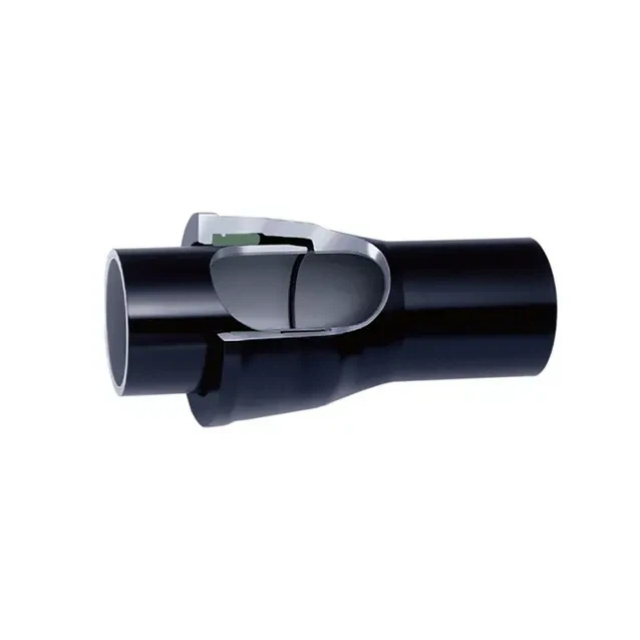
Cement mortar lining is commonly used in potable water pipelines. It provides a stable barrier that reduces corrosion risk and maintains smooth flow characteristics.
Hydraulic smoothness supports lower pumping energy consumption over time.
In wastewater or industrial systems with more aggressive internal conditions, alternative lining options may be appropriate.
Reviewing project conditions ensures internal protection aligns with the service environment.
Internal surface roughness influences flow efficiency. Proper lining selection minimizes scaling and sediment buildup, helping maintain consistent hydraulic performance.
Zinc coating combined with a seal coat provides corrosion protection in many soil environments. This external layer shields the pipe body from direct exposure to moisture and chemical elements.
High groundwater levels, saline soils, or industrial contamination can accelerate corrosion. Evaluating soil analysis reports helps determine whether enhanced external protection is required.
Corrosion develops gradually. Planning protective measures during specification prevents premature deterioration and costly repairs later.
Pipelines crossing highways, railways, or industrial zones require careful structural consideration. Route evaluation supports correct pressure class and joint selection.
Proper handling maintains coating integrity. Although ductile iron pipe is robust, logistical planning reduces surface damage risk during transportation and storage.
Pipeline systems consist of multiple components. Ensuring dimensional and mechanical compatibility prevents alignment issues during installation.
Shanxi Jincheng Steel Holding Group Co., Ltd., operating under the Jin Steel brand, has established a full industry chain steel manufacturing structure since 2002. With advanced production facilities covering millions of square meters, the group integrates raw material production, casting, machining, and quality inspection into a coordinated manufacturing system.
Recognized as a national intelligent manufacturing model factory and environmental protection enterprise, Jin Steel ensures consistent metallurgical control and stable product quality. Its ductile cast iron piping products benefit from controlled spheroidization processes and precision casting technologies.
This manufacturing foundation supports reliable supply, dimensional accuracy, and performance stability across multiple pressure classes and diameter ranges.
What to Confirm | Why It Matters | Common Mistake |
Fluid/application | Determines lining and coating compatibility | Selecting by lowest price only |
Working pressure | Defines required pressure class | Ignoring surge pressure |
Diameter requirement | Influences flow and energy efficiency | Matching outdated designs |
Joint type | Affects installation and restraint needs | Using one joint for all conditions |
Soil environment | Determines corrosion protection strategy | Overlooking soil testing |
Carefully reviewing these factors strengthens purchase confidence and protects infrastructure investment.
Selecting the correct specification for DUCTILE CAST IRON PIPES requires more than confirming the material category. Pressure class, diameter, joint configuration, lining, coating, and environmental conditions must align with real project demands. Matching specification to application protects long-term performance and reduces maintenance risk. Engineers and infrastructure planners worldwide continue to rely on ductile iron piping systems because of their adaptability, strength, and service reliability. For detailed technical information and project support, contact Jin Steel to discuss how our ductile iron pipe solutions can support your infrastructure development.
1. How do I choose ductile iron pipe pressure class?
Evaluate steady operating pressure and potential surge events. Select a pressure class that provides an appropriate safety margin.
2. Are DUCTILE CAST IRON PIPES suitable for wastewater systems?
Yes. With proper lining selection, they provide structural durability and long-term performance in many wastewater environments.
3. Does soil condition affect external coating selection?
Yes. Soil moisture and chemical content influence corrosion risk, making soil analysis important for coating decisions.
4. Why is joint type important when selecting ductile iron pipe?
Joint type influences installation speed, flexibility, and resistance to thrust forces, directly affecting overall pipeline stability.
