

 |


| Quantity: | |
|---|---|
When constructing complex fluid transport networks, achieving a smooth and reliable directional transition is paramount. The 22.5° Socket Bend serves as a critical junction component, designed to navigate subtle shifts in pipeline routing without inducing excessive friction or turbulence. Running a hand along the exterior reveals a solid, dense construction, indicative of its substantial metallic composition. The interior lining feels remarkably smooth to the touch, a deliberate engineering choice to minimize flow resistance and prevent sediment accumulation over decades of continuous operation. Tapping the surface yields a dull, reassuring resonance, confirming the absence of internal casting voids. This specific angular configuration allows engineers to bypass geographical obstacles or align with existing infrastructure gradients while maintaining optimal hydrodynamic efficiency. By integrating this fitting into your network, you ensure a continuous, unimpeded flow that reduces the overall energy required for fluid pumping and distribution.
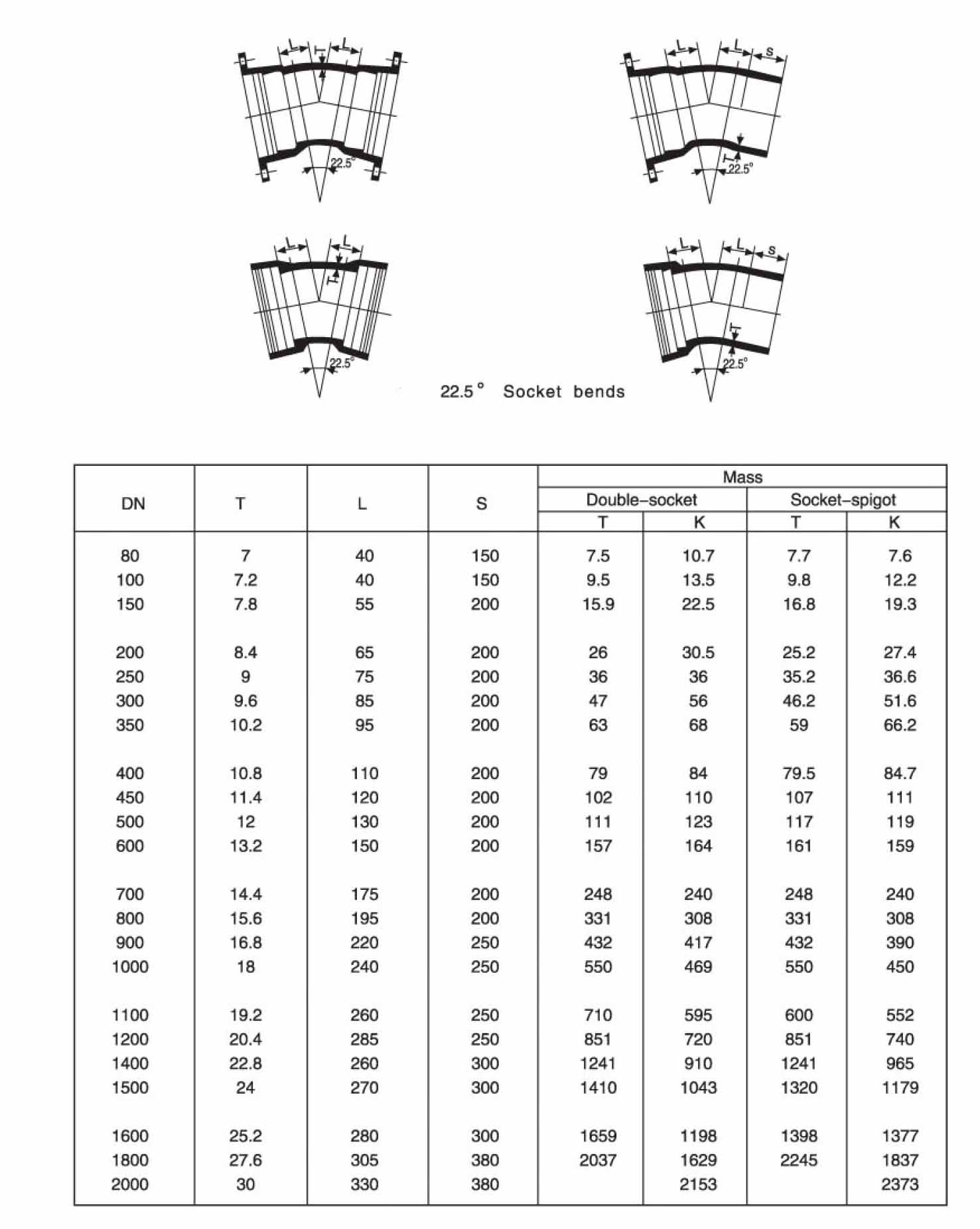
The foundation of this fitting’s longevity lies in its primary material: premium-grade ductile iron. Unlike standard grey iron, the nodular graphite structure within this alloy provides exceptional tensile strength and compressive capabilities, allowing it to withstand immense external earth loads and internal fluid pressures. To combat the harsh realities of underground installation, the exterior is treated with a specialized protective coating. This barrier presents a dark, uniform, and slightly textured finish that actively repels moisture and aggressive soil chemicals. Whether exposed to acidic soils, stray electrical currents, or fluctuating water tables, the inherent anti-corrosion properties significantly extend the operational lifespan of the pipeline system. This resilient material choice means fewer replacements, reduced maintenance interventions, and a more dependable infrastructure capable of enduring the most demanding environmental conditions.
A pipeline is only as reliable as its joints. To address this, the fitting is engineered to accommodate a dual-hardness T-type rubber ring. This elastomer gasket provides a fascinating combination of rigid mechanical support and adaptive deformation. The harder section of the ring anchors firmly within the socket groove, preventing displacement during installation, while the softer section compresses against the inserted spigot. As internal fluid pressure increases, the rubber dynamically expands, tightening the seal further. This self-sealing mechanism ensures an absolute leak-proof connection, even under fluctuating pressure surges. The tactile resilience of the rubber compound resists degradation from water treatment chemicals and temperature variations, maintaining its elastic memory year after year to safeguard the network against costly and disruptive water loss.
Consistency and compatibility are crucial for large-scale infrastructure projects. This angular fitting is manufactured in strict adherence to EN545 and other recognized international standards, ensuring it integrates flawlessly with existing standardized networks. Available across a comprehensive range of DN dimensions, it comes standard with a K-class rating of K=12, providing the necessary wall thickness for heavy-duty applications. To assist project planners, detailed engineering drawings and dimensional tolerances are provided, allowing for precise spatial calculations before ground is even broken.
| Feature | Specification Details |
|---|---|
| Standard Compliance | EN545 / ISO2531 |
| Wall Thickness Class | K=12 (Standard Configuration) |
| Joint Mechanism | Push-on Socket with T-Type Gasket |
| Available Dimensions | Full DN Series for comprehensive matching |
This rigorous standardization guarantees that field crews will not face unexpected alignment issues, streamlining the entire assembly process and keeping project timelines on track.
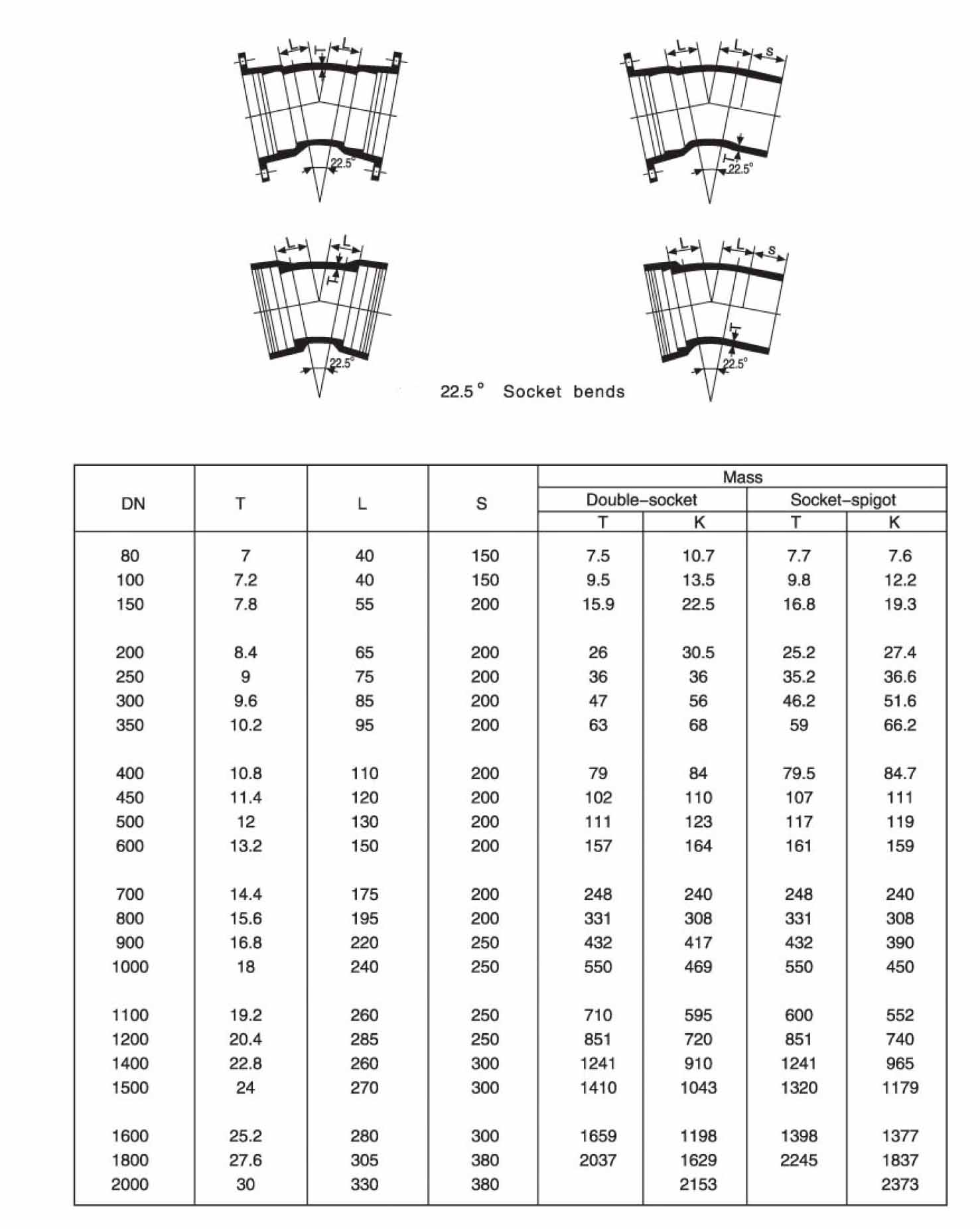
The physical demands of assembling large-diameter pipelines require components that facilitate straightforward handling. The optimized push-on socket design eliminates the need for complex welding, flanging, or specialized heavy jointing machinery. Field crews can achieve a secure connection rapidly using standard leverage tools, significantly reducing labor hours in the trench. Furthermore, the joint architecture is not entirely rigid; it permits a calculated degree of angular deflection. This crucial flexibility allows the pipeline to absorb minor ground settlement, seismic tremors, or thermal expansion without stressing the metal or compromising the seal. By accommodating these subtle environmental shifts, the fitting protects the broader network from catastrophic stress fractures, ensuring continuous operation in geologically active or settling terrains.
The precise 22.5-degree curvature makes this fitting an indispensable asset across a diverse array of fluid management sectors. Its geometry provides a gentle transition that minimizes the risk of water hammer and reduces the accumulation of debris at directional change points.
Municipal Water Networks: Navigating urban underground congestion while maintaining strong, consistent potable water pressure to residential districts.
Wastewater Treatment: Facilitating the smooth routing of greywater and sewage, where the smooth internal lining prevents solid waste buildup.
Industrial Fluid Routing: Safely directing cooling water or processed fluids through complex manufacturing facilities without inducing flow bottlenecks.
Gas Transport Systems: Providing secure, leak-proof directional changes for low-pressure gas distribution networks.
In each of these scenarios, the component acts as a reliable pivot point, ensuring the safe and efficient transfer of critical resources.
Confidence in infrastructure components stems from verifiable testing and strict adherence to global safety protocols. This fitting holds prestigious international certifications, including ISO and CE marks, reflecting a commitment to manufacturing excellence. Before any unit is cleared for dispatch, it undergoes a battery of demanding assessments. The most critical of these is the hydrostatic pressure test, where the fitting is subjected to internal water pressures far exceeding normal operational parameters. This rigorous evaluation guarantees the absolute integrity of the casting and the reliability of the sealing mechanism. Visual and tactile inspections further ensure that the protective coatings are flawless and the socket dimensions are exact, providing engineers with the peace of mind that every installed piece will perform flawlessly under pressure.
Recognizing that large-scale infrastructure projects often present unique challenges, comprehensive OEM and ODM customization services are readily available. Whether a project requires non-standard coatings, specific dimensional tweaks, or specialized alloy compositions, the manufacturing process can be tailored to meet exact specifications. To support massive procurement demands, the logistics network is optimized for global reach. Products are meticulously secured on export-grade wooden pallets or enclosed in reinforced timber crates. The distinct scent of fresh wood packaging accompanies shipments that are heavily strapped and protected against maritime moisture, ensuring that whether the destination is a neighboring city or across an ocean, the fittings arrive in pristine, ready-to-install condition, keeping your project schedule completely uninterrupted.


